

 InfoSearched
Google just told the entire games industry that consoles might be optional.
At the Game Developers Conference in San Francisco on March 19, 2019, Google pulled back the curtain on Stadia, a cloud gaming platform built to stream games instantly to whatever screen happens to be in front of you. Engadget condensed the hour-plus keynote into a tight 14-minute highlight reel, and it’s packed with numbers and reveals that explain why the announcement rattled console makers. CEO Sundar Pichai opened the presentation by framing Stadia not as a box you buy, but as a service that follows you across laptops, desktops, TVs through Chromecast, tablets, and phones.
- Custom AMD GPUs powering Stadia deliver up to 10.7 teraflops — more combined horsepower than a PS4 Pro and Xbox One X put together.
- Stadia launches with 4K resolution, HDR, and 60 fps streaming at roughly 30 Mbps, with 8K at 120 fps promised down the road.
- id Software confirmed Doom Eternal will run on Stadia at 4K/60fps, while Ubisoft’s Assassin’s Creed Odyssey — the game that powered the earlier Project Stream beta — returned as a headline demo.
Pichai’s Pitch and the Hardware Behind It
Google VP Phil Harrison took over the technical portion of the keynote, showing how a player could launch a game in seconds through a web link, a YouTube video, or straight out of the Chrome browser — no install, no patch download, no disc. Harrison demonstrated session transfers live onstage, moving a game from one screen to another without restarting, which is the trick Stadia is actually selling: the game lives on Google’s servers, not on your hardware.
The specs backing that pitch were the headline number of the whole keynote. Stadia’s custom AMD GPU configuration hits 10.7 teraflops of compute, a figure Google explicitly compared to the combined output of Sony’s PS4 Pro and Microsoft’s Xbox One X. Streaming targets at launch were 4K resolution, HDR, and 60 frames per second, provided a player’s connection could sustain around 30 Mbps — with Google already talking about pushing to 8K and 120 fps in a future phase.
Custom AMD silicon delivering 10.7 teraflops — more than a PS4 Pro and Xbox One X combined.
The Games Doing the Talking
Specs are one thing; a stage demo of an actual game is what makes a GDC crowd sit up. id Software’s team confirmed that Doom Eternal would run on Stadia at native 4K and 60 fps, a notable claim given how demanding the id Tech engine can be. Fans tracking the game’s arsenal and mechanics can dig deeper in Doom Eternal: 10 Things The Game Doesn’t Tell You, and the eventual release itself is covered in the DOOM Eternal: Official Launch Trailer.
Ubisoft brought Assassin’s Creed Odyssey back into the spotlight, the same title that had already been quietly proving cloud streaming could work through Google’s earlier Project Stream trial. Having a AAA open-world game with that much draw distance and NPC density running through a browser was the clearest signal that Stadia wasn’t just a tech demo — it was being built to carry real, current releases at launch.
The Controller and the Studio
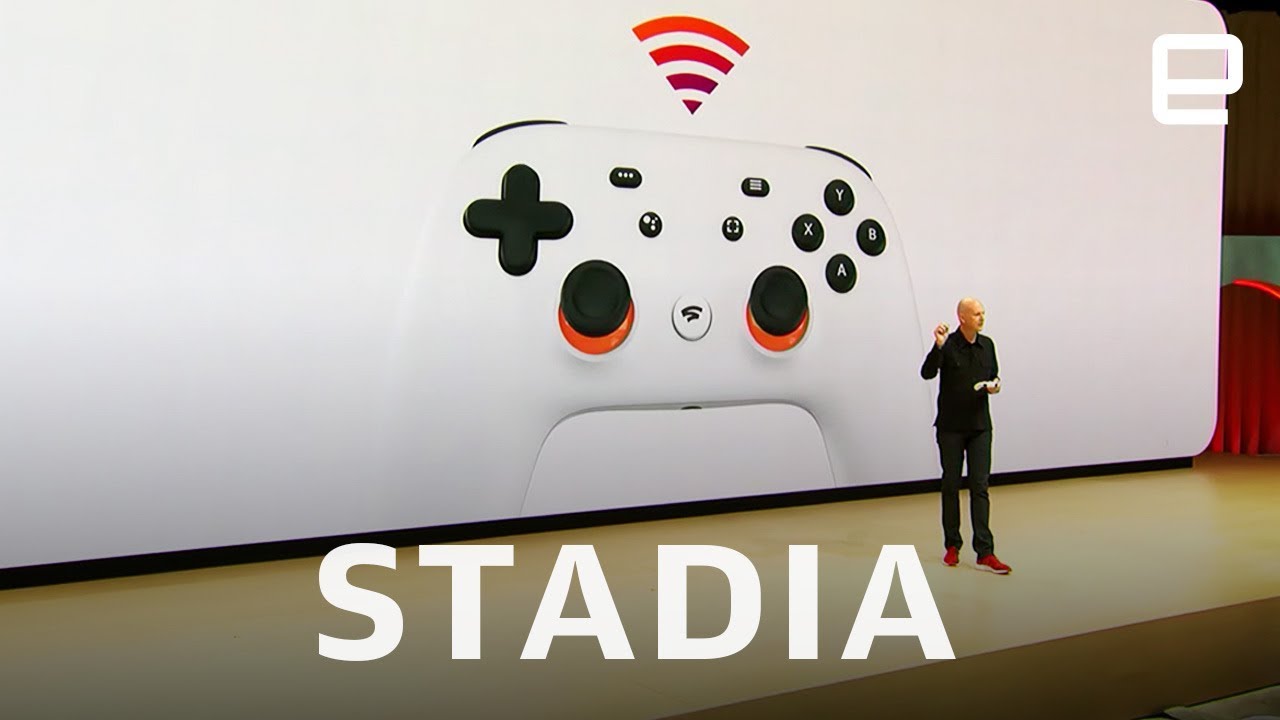
Google also unveiled the Stadia Controller, a Wi-Fi-connected pad that talks directly to Google’s data centers rather than routing through a console or PC. It ships with a dedicated capture button for instantly grabbing gameplay clips and built-in Google Assistant integration, tying the hardware directly into Google’s existing ecosystem rather than treating it as a standalone gaming peripheral.
Perhaps the most consequential hire announced that day was Jade Raymond, the industry veteran brought in to lead Stadia Games and Entertainment — Google’s first attempt at building a first-party game development studio. Her presence signaled Google wasn’t just renting out infrastructure to publishers; it intended to make its own exclusive content for the platform, something no cloud service had seriously attempted before.
The Bigger Play in Gaming
What made the keynote land the way it did wasn’t any single feature — it was Google stacking hardware specs, a working AAA demo, dedicated controller hardware, and a studio head into one presentation and daring the console makers to respond. Readers curious how Stadia’s ambitions actually played out over the following years can compare the promises made at GDC against what happened afterward in What happened To The Stadia?, and the wider push toward next-gen streaming and hardware is tracked under Google on the site.
The next real test for Stadia wasn’t the keynote stage — it was going to be whether “instant, no-download 4K gaming” held up once it left a controlled GDC demo room and hit millions of home internet connections running well under that 30 Mbps target.


NEW MARVEL’S AVENGERS GAMEPLAY..
The PC Gaming Show at E3 2019
PlayStation Plus (PS+) August 2019
Call of Duty Warzone is the best Battle Royale
PS5 Unreal Engine 5 Tech Demo