

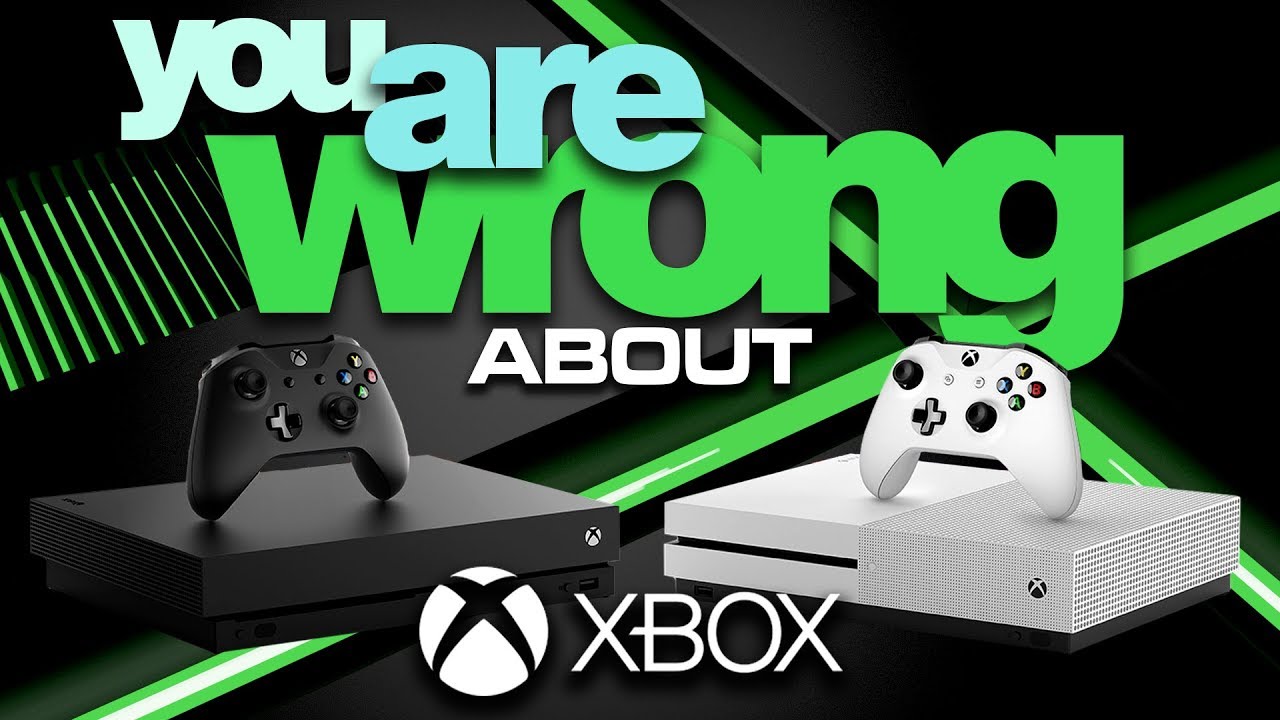
You Are Wrong about Xbox | Lies & Truths about Future of Xbox One and Project Scarlett
 InfoSearched
The Xbox faithful spent the summer of 2019 arguing about a console that didn’t exist yet.
Colt Eastwood, one of gaming’s more level-headed commentary voices, used his August 2019 video to cut through the noise surrounding Project Scarlett and the tail end of the Xbox One era. His target wasn’t Microsoft — it was the pile of half-true rumors that had built up since Phil Spencer walked onstage at E3 in June 2019 and confirmed the next Xbox by name. Eastwood’s pitch was simple: most of what gamers think they know about where Xbox is headed is either outdated, exaggerated, or flatly wrong.
- Phil Spencer formally revealed Project Scarlett at E3 in June 2019, confirming a custom AMD Zen 2 CPU, Radeon RDNA GPU with hardware-accelerated ray tracing, GDDR6 memory, and a solid-state drive built to eliminate load-time bottlenecks.
- Microsoft confirmed Project Scarlett will support up to 120 FPS and 8K output, backward compatibility spanning four generations of Xbox hardware, and a Holiday 2020 launch alongside Halo Infinite.
- Rumors of multi-tier hardware SKUs — codenamed Anaconda and Lockhart — and questions about Xbox One’s cross-generation software support were addressed directly, alongside Microsoft’s push behind Xbox Game Pass and Project xCloud streaming.
Correcting the Record on Xbox One’s Legacy
Eastwood didn’t pretend the Xbox One had a clean launch. The 2013 rollout was hampered by mixed messaging, an always-online DRM scheme Microsoft was forced to reverse before release, and a hardware gap against Sony’s PlayStation 4 that dogged the console for years. That history is exactly why so much of the current Project Scarlett discourse gets colored by suspicion — fans who remember the Xbox One’s stumble assume Microsoft is capable of repeating it.
But Eastwood’s argument is that Spencer’s Xbox division operates on a completely different playbook now. Rather than a hard generational cutoff that strands existing hardware owners, Microsoft has spent the back half of the Xbox One’s life building an ecosystem — Xbox Game Pass, cross-buy titles, and a services-first mentality — designed specifically to avoid repeating 2013’s mistakes. That shift is the throughline connecting the Xbox One’s recovery to how Project Scarlett is being positioned.
The Hardware Targets Microsoft Actually Confirmed
The technical specifics matter because so much of the online rumor mill filled gaps with guesswork. Eastwood laid out what Microsoft had actually put its name to: a custom AMD Zen 2 CPU paired with Radeon RDNA graphics architecture capable of hardware-accelerated ray tracing, GDDR6 memory for bandwidth, and a solid-state drive purpose-built to kill loading screens rather than just shorten them. On top of that, Microsoft confirmed targets of up to 120 frames per second and 8K visual output — numbers that go well beyond what Xbox One X was ever built to handle.
Those specs are also the backbone of the reveal covered in the full Xbox & Bethesda Games Showcase, where Microsoft has continued to frame Project Scarlett as a platform built around performance headroom rather than a single flashy feature.
Defining Anaconda, Lockhart, and Backward Compatibility
Two codenames — Anaconda and Lockhart — had been circulating for months as evidence Microsoft was quietly building two different next-gen boxes at two different price points. Eastwood’s video treated this less as scandal and more as standard pre-launch hardware speculation, noting that regardless of how many SKUs eventually ship, Microsoft’s stated commitment is backward compatibility stretching across four generations of Xbox consoles — original Xbox, 360, Xbox One, and whatever ships next.
That’s a deliberate contrast with how generational transitions used to work. Instead of asking Xbox One owners to abandon their library, Microsoft’s plan leans on Game Pass and cross-generational software rollouts so a game launching in the Xbox One’s final years can carry forward onto Scarlett without a repurchase. Project xCloud, Microsoft’s cloud-streaming initiative, extends that same logic to hardware itself — letting games run on infrastructure the player never has to own outright.
Microsoft isn’t cutting the cord on Xbox One — it’s trying to make sure nobody notices when the cord gets replaced.
Halo Infinite and the Holiday 2020 Timeline
The launch window Microsoft committed to — Holiday 2020 — comes with a flagship attached: Halo Infinite, positioned as the system-seller meant to anchor Project Scarlett’s debut the way Halo titles have anchored past Xbox launches. Eastwood’s video treats that pairing as the clearest signal of Microsoft’s actual strategy, distinct from the fan speculation about exclusives drying up. For a deeper dive into how that generational jump is shaping up hardware-side, The Truth About Xbox Series X picks up where this specs conversation leaves off.
None of this erases the Xbox One’s rocky start back in 2013, and Eastwood never argued it should. What his video makes clear is that the rumors swirling in August 2019 — abandoned hardware, secret pricing traps, exclusives vanishing — don’t match what Spencer and Microsoft had actually put on record at E3. Whether that record holds up is a question for Holiday 2020, when Halo Infinite and Project Scarlett are supposed to answer it together.


Stranded Deep – Official Launch Trailer | PS4
CYBERPUNK 2077 – 1 Hour of Open World Gameplay Walkthrough 4K
7 Google Stadia alternatives you can game on right now
PS5 Rumors Getting Out of Hand. Spider-Man & GT7 Rumors. New Sony Patent for PS5?
7 Habits Only LATE NIGHT Gamers Have