

 InfoSearched
Kojima Productions just gave Digital Foundry a reason to rewrite its list of PS4 showcase titles.
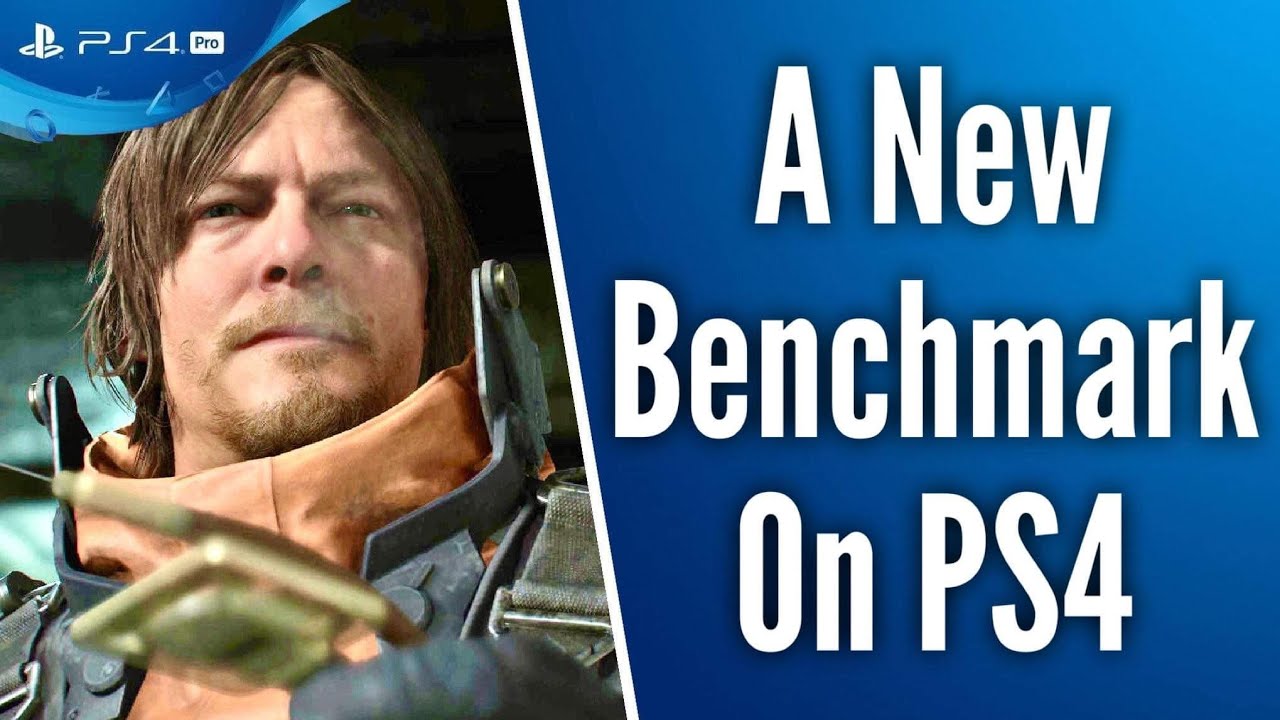
Two days after Death Stranding launched on PlayStation 4, Digital Foundry ran its usual technical breakdown — and this time the verdict wasn’t measured praise, it was a declaration. The Eurogamer-affiliated analysis outlet called Hideo Kojima’s genre-bending delivery-and-survival epic “a new benchmark for this console generation,” putting it above the PS4’s existing crown jewels on pure technical merit. Gaming commentator MBG picked up on the breakdown and walked through exactly why Digital Foundry landed there.
- Death Stranding runs on a heavily modified version of Guerrilla Games’ Decima Engine, the same tech that powered Horizon Zero Dawn, retooled for photorealistic terrain and cinematic facial capture.
- Digital Foundry confirmed rock-solid 30 fps performance on both base PS4 and PS4 Pro, alongside standout atmospheric scattering and terrain deformation.
- More than 70 Guerrilla Games developers were credited on the project, a level of cross-studio engineering support that let Kojima Productions ship the game roughly three years after the studio’s independent launch.
The Engine Behind the Benchmark
Decima wasn’t built for this. Guerrilla Games originally developed the engine for Horizon Zero Dawn’s sprawling machine-infested wilderness, but Kojima Productions and Guerrilla worked directly together to push it toward something closer to photorealism — high-fidelity facial animation, cinematic cutscene rendering, and the kind of rocky, wind-scoured post-apocalyptic terrain that Death Stranding’s delivery routes wind through for dozens of hours. Digital Foundry singled out the character modeling and atmospheric scattering as evidence that Decima had been stretched well past its Horizon-era ceiling.
That stretch didn’t come cheap in engineering hours, which is exactly where Guerrilla’s fingerprints show up most. According to Digital Foundry’s breakdown, source-code integration and hands-on engineering support from Guerrilla’s side were central to how quickly the game came together — a detail that matters given Kojima Productions was still a young, independent studio rebuilding its pipeline from scratch.
Sony’s Cross-Studio Bet Paid Off
Over 70 Guerrilla Games developers ended up credited on Death Stranding, a scale of collaboration that Digital Foundry and MBG both flagged as unusual even by first-party PlayStation standards. Sony Interactive Entertainment effectively loaned out engineering muscle from one studio to another, and the payoff was a title that shipped roughly three years after Kojima Productions went independent — a tight turnaround for a game with this level of visual ambition.
Digital Foundry called Death Stranding “a new benchmark for this console generation.”
That partnership model is worth watching beyond this one release. Sony has leaned on internal engine-sharing before, but rarely at this depth, and it raises the question of whether other PlayStation studios — the kind pushing visuals in titles like Ghost of Tsushima — might get similar cross-pollination treatment as the PS4 generation winds down.
Ranking Among Best PS4 Titles
Digital Foundry’s comparison set wasn’t arbitrary. God of War, Uncharted 4: A Thief’s End, and Marvel’s Spider-Man have spent years as the PS4’s default answer to “what does this hardware look like at its absolute limit.” Death Stranding entering that conversation — and, per Digital Foundry’s framing, topping it — says something about how much headroom developers were still finding in 2019, years into a console cycle that many assumed had already peaked technically.
None of it required next-gen hardware. The base PS4, a system by then over six years old, was still holding a locked 30 fps through Decima’s upgraded lighting and deformation systems, which is the detail Digital Foundry kept returning to throughout its breakdown.
Kojima Productions didn’t just ship an ambitious game three years after going independent — it shipped one that made Sony’s own in-house engine team, over 70 developers deep, look like co-authors rather than consultants. That’s the number worth remembering next time somebody brings up how fast Death Stranding actually came together.


FULL Nintendo E3 2019 Direct
PlayStation CEO Says He’s Focused on the Games When it Comes to PS5 | New Studio Opening in 2020
Final Fantasy VII Remake – Final Trailer | PS4
This video will make you want to play Rainbow Six Siege
5 Reasons You Should Buy Xbox One Instead of PlayStation 4 in 2019 | PS4 vs Xbox 2019