

 InfoSearched
Somewhere in Japan right now, a urinal is keeping score.
Japan builds the consoles the rest of the world plays on, but it also builds gaming hardware nobody else would dare manufacture. TheGamer’s rundown of “Weirdest Gaming Tech You Can Only Buy In Japan” digs into a subculture of peripherals that never got a Western release — and in at least one case, never needed a controller at all. From a Sega-built urinal that scores your aim to a drum built to survive being smashed by professionals, the list is a reminder that Japanese arcade culture treats novelty hardware as seriously as any console launch.
- Sega commercially launched the Toylet in late 2011, installing it above urinals in Japanese bars and public restrooms with an eye-level LCD screen and sensors that read urine flow, speed, and volume.
- Bandai Namco’s Tatacon drum controller was built specifically to replicate traditional taiko drumming for the Taiko no Tatsujin rhythm franchise.
- Other Japan-only oddities covered include the Densha de Go! train-cabin simulation controllers and the Trance Vibrator peripheral made for Tetsuya Mizuguchi’s Rez on PlayStation 2.
The Sega Toylet Turns a Bathroom Break Into an Arcade Session
The Sega Toylet looks like an ordinary urinal until you notice the screen mounted above it. Inside the basin, an infrared approach sensor and microwave speed sensors track exactly how a user is doing their business, then feed that data into one of several built-in minigames. It’s not a novelty prototype either — Sega actually rolled these out commercially into Japanese bars and public restrooms starting in late 2011.
The minigames themselves are exactly as absurd as the concept demands. Stream strength and control become the input method for blasting away spray-painted graffiti, and other modes turn bodily function into competitive gameplay in ways no other console manufacturer has ever attempted.
One mode has players using their stream to blow wind up a cartoon girl’s skirt; another squirts milk out of a rival’s nose.
It’s the kind of hardware that could only come from a company willing to put its own logo on a urinal — and Sega, the same brand behind the Genesis and Dreamcast, did exactly that.
The Tatacon Turns a Living Room Into a Taiko Stage
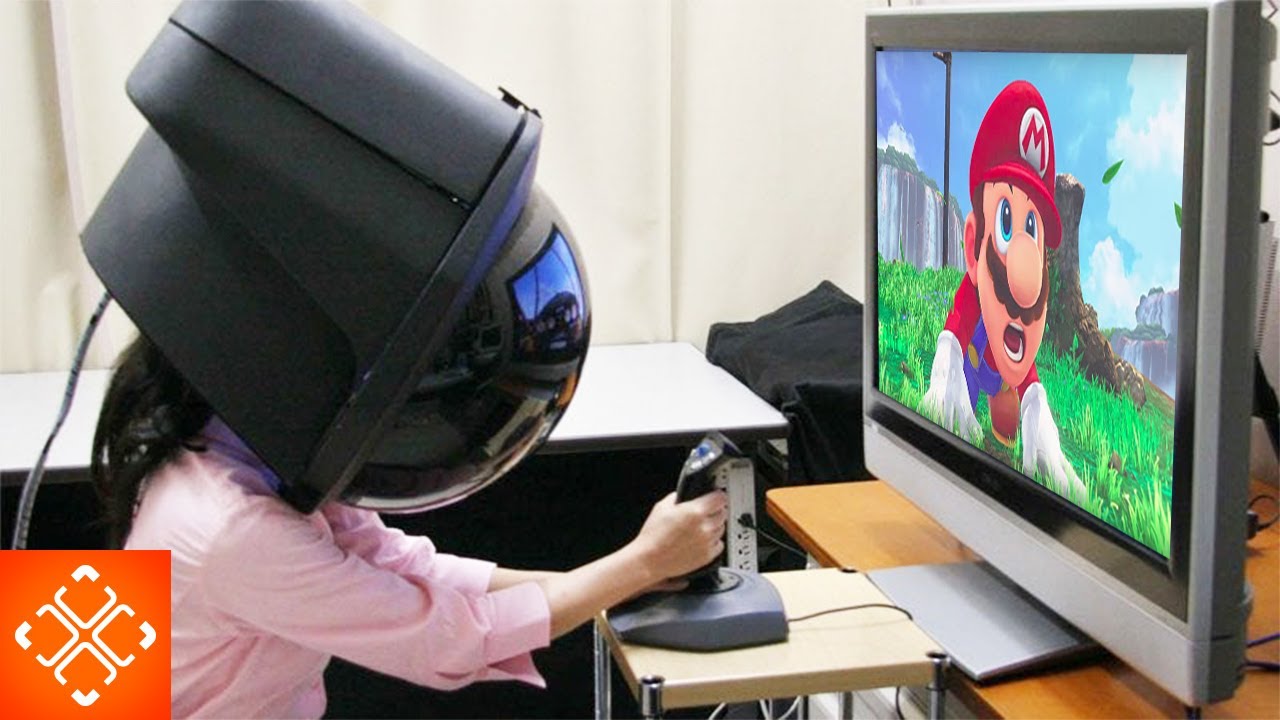
Bandai Namco’s Taiko no Tatsujin series built its entire identity around traditional Japanese drumming, and the Tatacon controller exists to make that translation as physical as possible. Rather than a standard plastic peripheral, the drum is built to take real hits, letting players strike it the way they’d strike an actual taiko drum in a matsuri performance rather than tapping buttons on a gamepad. It’s become one of the franchise’s signature pieces of hardware precisely because it commits to the bit instead of faking it with rumble motors.
Densha de Go! and the Trance Vibrator Round Out the Weirdness
The list doesn’t stop at bathrooms and drums. Densha de Go! built dedicated train-cabin simulation controllers so players could recreate the exact motions of piloting a Japanese commuter line, right down to the throttle and brake levers a real conductor would use. And when Tetsuya Mizuguchi’s Rez hit PlayStation 2, it shipped alongside the Trance Vibrator, a peripheral built to sync haptic feedback to the game’s synesthetic music-and-shooting gameplay rather than to any conventional rumble pattern.
Each of these pieces of hardware points to the same pattern: Japanese developers treating peripherals as an extension of a game’s atmosphere rather than an accessory bolted on after the fact. That’s a very different design philosophy than the one behind Western console generations, which players can trace across decades in the best-selling console history from 1972 to 2019.
A Culture That Keeps Making Headlines
Japan’s appetite for unconventional gaming hardware isn’t limited to peripherals sitting on store shelves — it shows up in the players, too, as seen when a 90-year-old Japanese grandma went viral flexing her fingers for video gaming. Between urinal arcades, taiko drums built for stage combat, and vibrating PS2 peripherals, the throughline is a gaming culture that treats weird as a feature, not a bug.
None of this hardware ever got an official Western release, and that’s exactly why it keeps circulating on lists like this one — the Toylet alone is worth the trip to a Japanese arcade bar just to see the graffiti-eraser minigame in person.







10 Video Game Fates Worse Than Death
Stranded Deep – Official Launch Trailer | PS4
10 NEW Games of July 2020 To Look Forward To [PS4, Xbox One, Switch, PC]
Call of Duty Warzone – Official Trailer
Battlefield 2042 – Official Reveal Trailer