

 InfoSearched
A game built in a few days out of a bouncing ping-pong ball became the most downloaded app on Earth — and then its creator deleted it out of self-preservation.
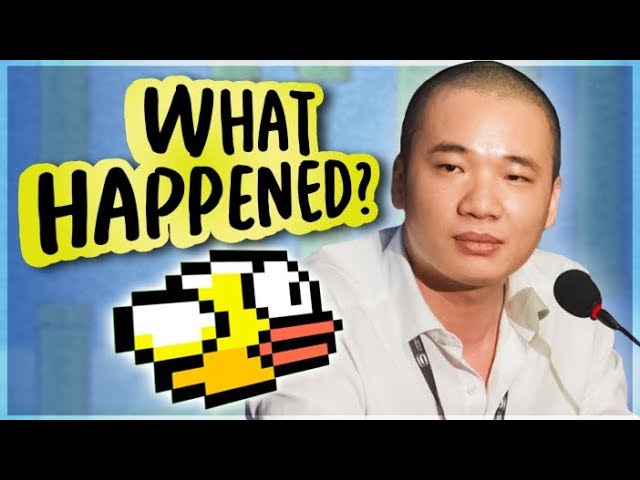
Flappy Bird looked like nothing. A pixelated bird, a row of green pipes, one tap to flap. But for a few weeks in early 2014, that tiny side-scroller from a solo Vietnamese developer named Dong Nguyen sat atop both the iOS App Store and Google Play, printing an estimated $50,000 a day in ad revenue. Then, just as fast as it rose, Nguyen pulled it — and the story behind why is stranger than the game itself.
- Dong Nguyen (developer handle .Gears) built Flappy Bird in a matter of days, releasing it in May 2013 with a design inspired by watching a ping-pong ball bounce on a paddle.
- By late January 2014, the game had climbed to number one on both the iOS App Store and Google Play, reportedly generating around $50,000 per day in in-app advertising.
- On February 8, 2014, Nguyen tweeted, “I am sorry ‘Flappy Bird’ users, 22 hours from now, I will take ‘Flappy Bird’ down. I cannot take this anymore,” and followed through on February 10.
From Ping-Pong to Pocket Phenomenon
Nguyen wasn’t chasing a hit. Flappy Bird was a side project, thrown together in a handful of days as part of a small catalog of games he’d been quietly releasing under the name .Gears. Its punishing difficulty — one mistimed tap and you’re back to zero — was the whole hook, the same kind of frustration-loop that has powered games designed to punish players for stepping away for decades.
For months after its May 2013 launch, nothing happened. Then, without warning, downloads exploded in early 2014, and word-of-mouth turned it into the kind of title people couldn’t stop talking about — or ragequitting.
The Numbers Behind the Frenzy
At its peak, Flappy Bird sat at number one on both the iOS App Store and Google Play simultaneously, a feat few apps manage. The advertising math was staggering for a game this simple: roughly $50,000 a day, generated by a single developer with no studio, no marketing budget, and no publisher behind him. It’s the kind of overnight windfall that echoes other stories of players and creators who caught lightning in a bottle with one game — except here, the payoff came with a cost nobody priced in.
Death Threats and the Decision to Pull It
The backlash arrived almost as fast as the fame. Nguyen faced relentless international media attention, public accusations that Flappy Bird’s pipe graphics were lifted from Nintendo’s Mario franchise, and — far more seriously — death threats sent to him directly on Twitter.
I am sorry ‘Flappy Bird’ users, 22 hours from now, I will take ‘Flappy Bird’ down. I cannot take this anymore.
Nguyen kept his word. On February 10, 2014, Flappy Bird disappeared from both storefronts. In an exclusive interview with Forbes shortly afterward, he explained that the game had originally been built to play when relaxed, but had turned into something addictive and harmful — disrupting his sleep, his normal life, and, by extension, the lives of everyone playing it obsessively. That’s the same warning sign that shows up across games that quietly take over a player’s daily routine, except Nguyen was watching it happen to millions of strangers at once and decided he was done being responsible for it.
The Aftermath: eBay Auctions and Clone Wars
Deleting Flappy Bird didn’t kill it — it just changed the market. Phones with the app still installed started listing on eBay for thousands of dollars, since new downloads were no longer possible. App stores, meanwhile, filled up with a flood of Flappy Bird clones trying to cash in on the vacuum Nguyen left behind. He, for his part, retreated into seclusion, stepping away from the spotlight he never asked for.
Nguyen never brought the original back. By the time this story got told again years later, Flappy Bird remained exactly what it was on February 10, 2014: gone, unrecoverable through official channels, and worth more as a relic on a used iPhone than it ever earned most of its imitators.


New *SEASON 7* TRAILER + COUNTDOWN in FORTNITE!
Rainbow Six Siege: The Tournament of Champions – Six Invitational 2020
Is Google Stadia the FUTURE of Gaming?
ROBLOX MOVING DAY…
30 BIGGEST Games To Look Forward To At E3 2019