

 InfoSearched
Microsoft just showed its hand on the console that’s supposed to end the loading screen for good.
Ahead of the Xbox Series X’s Holiday 2020 launch, Microsoft pulled back the curtain on the machine’s full architecture in a March 2020 deep dive alongside Digital Foundry, and the numbers explain why the company has been so confident talking about it publicly, including in follow-up appearances like Xbox’s own comments pushing back on comparisons to Sony’s next-gen graphics. Formerly known as Project Scarlett, the Series X is built around a custom AMD chip on a 7nm enhanced process, a bespoke SSD architecture, and a physical design unlike anything Microsoft has shipped before. Here’s what the spec sheet actually says, piece by piece.
- The Series X runs an 8-core, 16-thread Zen 2 CPU at 3.8 GHz (3.66 GHz with SMT enabled) paired with a custom RDNA 2 GPU pushing 12.155 teraflops across 52 compute units at 1.825 GHz.
- The console carries 16 GB of GDDR6 memory over a 320-bit bus (10 GB at 560 GB/s, 6 GB at 336 GB/s) and a custom 1 TB NVMe SSD rated at 2.4 GB/s raw and up to 4.8 GB/s compressed throughput.
- The “Xbox Velocity Architecture” combines that SSD, the DirectStorage API, and hardware-accelerated decompression to power Quick Resume, letting players suspend and jump between multiple games almost instantly.
The Silicon Doing the Work
Strip away the marketing language and the Series X is, at its core, a 7nm AMD chip pairing Zen 2 CPU cores with an RDNA 2 GPU — the same architectural family AMD uses across its current PC lineup, just tuned specifically for this box. That 8-core, 16-thread CPU at 3.8 GHz gives developers a real jump in raw processing headroom over the Xbox One X, while the 52 compute units clocked at 1.825 GHz are what get Microsoft to its headline 12.155 teraflop figure.
That GPU horsepower is also what unlocks hardware-accelerated DirectX ray tracing, native 4K at 60 frames per second as the target baseline, and support scaling up to 120 FPS or even 8K output depending on the title. Paired with Dynamic Latency Input over HDMI 2.1, Microsoft’s pitch is a console built for competitive responsiveness as much as visual fidelity — a combination it has leaned on heavily in showcases like the one detailed in the roundup of new Series X games shown at the Xbox event.
Memory and the Bandwidth Split
The 16 GB of GDDR6 RAM is split across a 320-bit bus into two pools: 10 GB running at 560 GB/s for graphics-intensive tasks, and 6 GB at 336 GB/s for general system operations. That asymmetric split is a deliberate engineering tradeoff, giving developers a clearly defined fast lane for the data that needs it most rather than treating all 16 GB as one uniform block.
It’s a different approach to memory bandwidth than what’s been discussed on the PlayStation side, where Sony’s own next-gen SSD work has drawn comparable attention — as covered in the breakdown of how the PS5’s SSD changes more than just load times. Microsoft’s version of that same storage conversation centers on its custom 1 TB NVMe drive, built specifically to feed the Velocity Architecture rather than function as an off-the-shelf component.
2.4 GB/s raw, up to 4.8 GB/s compressed — the custom NVMe SSD is the backbone of everything Microsoft calls the Xbox Velocity Architecture.
Quick Resume and the Death of the Load Screen
The Velocity Architecture isn’t just a storage spec — it’s the software layer stitched on top of that SSD, combining the DirectStorage API with hardware-accelerated decompression. The practical result is Quick Resume: the ability to suspend several games simultaneously and jump back into any of them almost instantly, no restart and no lengthy reload. Microsoft has positioned this as one of the console’s signature generational leaps, on par with the jump to solid-state storage itself.
The Physical Design
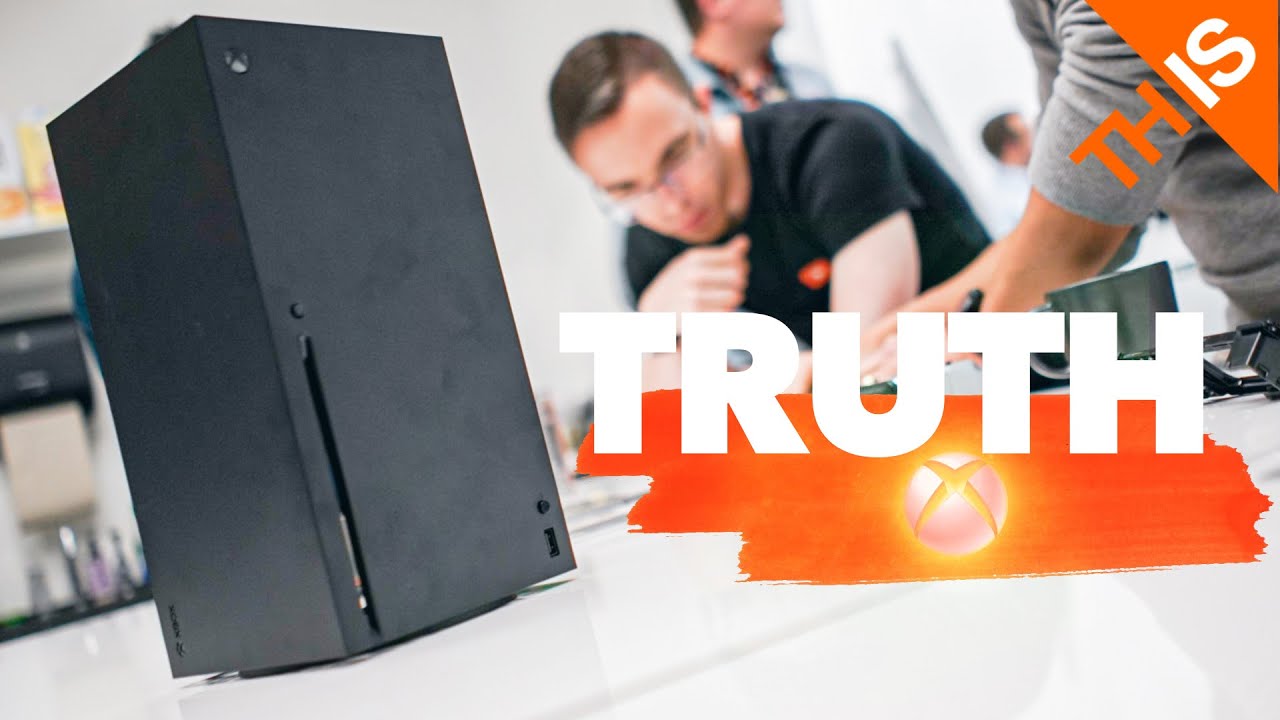
Visually, the Series X breaks from every prior Xbox. It’s a matte-black vertical monolith measuring 301 mm by 151 mm by 151 mm, topped with a concave ventilation grille lit from beneath with a green accent underlay. The upright, tower-like footprint is a deliberate departure from the wide, flat consoles Microsoft has shipped since the original Xbox in 2001, and it’s built to guarantee backward compatibility across four generations of Xbox software along with existing Xbox One controller accessories — a detail worth keeping in mind for anyone tracking the console lineup covered in the history of best-selling consoles going back to 1972.
With the specs locked and Holiday 2020 on the calendar, the real test shifts to what developers actually squeeze out of the 12.155 teraflops and that 4.8 GB/s compressed SSD once launch titles start shipping — Quick Resume sounds great on a spec sheet, but it’s the games running on day one that will decide whether the Velocity Architecture lives up to the pitch.








*NEW* F1 CARS and RACES UPDATE in GTA 5! (DLC)
The First 10 Minutes of DOOM Eternal (4K/60fps)
Fan Reimagines Super Mario Bros. as an Unreal FPS – Gameplay
Top 10 BEST NEW Upcoming Games of 2020 | PC,PS4,XBOX ONE (4K 60FPS)
I’VE MADE A HORRIBLE MISTAKE | The Walking Dead Saints and Sinners VR