

 InfoSearched
Google showed off cloud gaming at GDC 2019 — and the hands-on verdict was anything but simple.
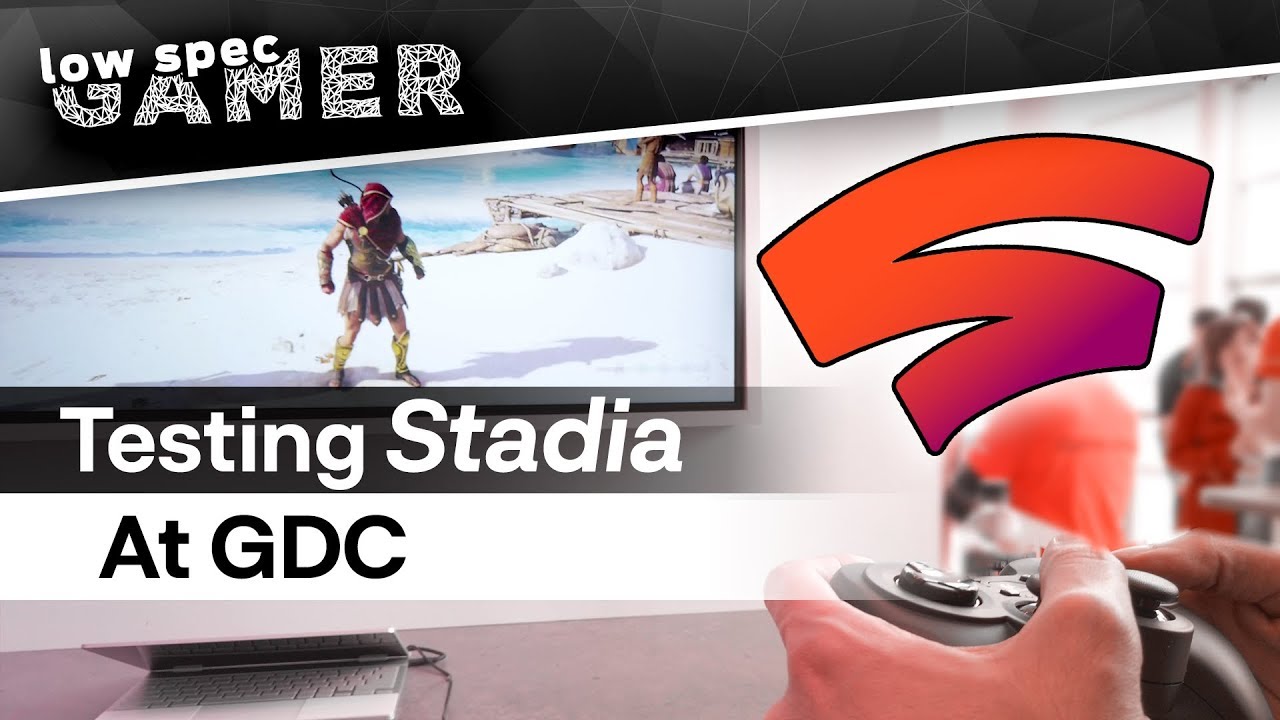
When Google took the stage at the Game Developers Conference in San Francisco on March 19, 2019, it promised something that sounded almost too good to be true: AAA games streamed straight through Chrome, a Chromecast, or a phone, no console or gaming PC required. YouTube creator LowSpecGamer got hands-on time with the platform on the show floor and posted his impressions in a video titled “I tried Google Stadia at GDC 2019. I have Mixed Feelings” — a title that ended up summing up the reaction of a lot of people who tried it that week.
- Google unveiled Stadia at GDC on March 19, 2019, showcasing Assassin’s Creed Odyssey and announcing Doom Eternal, running on custom AMD server hardware rated at 10.7 teraflops of graphics compute.
- Show-floor demos streamed at 1080p and 60 frames per second, with Google promising future support for 4K at 60fps over a broadband connection of roughly 25 Mbps.
- Hands-on testers flagged noticeable input latency and compression artifacts similar to YouTube video encoding, while Google’s keynote left out pricing, subscription details, and bandwidth requirements for launch.
The Reveal and the Hardware Behind It
Stadia’s pitch at GDC was straightforward: kill the hardware barrier to high-end gaming. Instead of a console generation, Google leaned on custom AMD server blades pushing 10.7 teraflops of graphics compute — more raw power, on paper, than either Xbox One X or PS4 Pro offered at the time. The demo lineup included Assassin’s Creed Odyssey running live on the show floor, alongside the announcement that id Software’s Doom Eternal would also be playable on the service.
Streams on-site ran at 1080p/60fps, with Google talking up a future jump to 4K/60fps for anyone with a stable ~25 Mbps connection. That’s the number that stuck with a lot of attendees, because it’s a real bar for a lot of home internet setups, not a theoretical one.
The Reality of Playing Stadia
According to LowSpecGamer’s hands-on impressions, the visual side of Stadia held up better than skeptics expected — even in a noisy, crowded convention hall full of competing Wi-Fi signals, the stream stayed largely stable. But stability isn’t the same as feel, and that’s where the cracks showed. Testers and technical analysts covering the demo consistently pointed to perceptible input lag, along with compression artifacts that looked more like a heavily-encoded YouTube video than a locally-rendered game — a real problem for anything fast-paced where a frame or two of delay changes the outcome.
“I tried Google Stadia at GDC 2019. I have Mixed Feelings.”
Wireless controller response came up as another sticking point. In a genre-agnostic tech demo, none of this necessarily kills the pitch. In something twitchy and competitive, it’s the difference between landing a headshot and eating one.
Unspoken Truths About Google Stadia
The bigger issue wasn’t technical — it was informational. Google’s GDC keynote left the room without consumer pricing, without a subscription model, without regional bandwidth requirements spelled out, and without clarity on digital ownership terms for games bought through the service. For a platform asking people to trust their entire game library to a server farm instead of a hard drive, those are not small blanks to leave unfilled. It’s part of why community reaction split down the middle — genuine excitement about accessible high-end gaming running headfirst into skepticism about whether home internet in the real world could actually deliver what the show floor did.
Anyone curious how that tension eventually played out for Google’s own service can dig into the ecosystem later — the earlier What happened To The Stadia? piece picks up where questions like these left off.
Mixed Feelings, By Design
What made LowSpecGamer’s video stand out from the wave of GDC coverage wasn’t hype or dismissal — it was the refusal to pick a side. The graphics held up. The concept was real. The latency was real too, and so was the absence of a price tag. Google had built something that worked well enough to prove cloud gaming wasn’t science fiction anymore, without proving it was ready to replace the console sitting under anyone’s TV.


Xbox Boss Reacts to PS5 Event
Nioh 2 Review
Esports: Inside the relentless training of professional gaming stars
I am the ultimate player in Rainbow Six Siege
Doom Eternal: 10 Things The Game DOESN’T TELL YOU