

 InfoSearched
Google unveiled a gaming platform with no console, no disc drive, and a chipset punching harder than Xbox One X and PS4 Pro combined.
Google Stadia landed at GDC on March 19, 2019, and the pitch was blunt: forget the box under your TV. Stream AAA games straight to a phone, a laptop, a Chrome tab, or a television through a Chromecast Ultra, with no install and no download bar. Unbox Therapy’s Lewis Hilsenteger broke down the keynote in his video “Google Stadia Is Here. Is Xbox Doomed?” and the question underneath the clickbait title is a real one for an industry built on selling hardware.
- Google’s custom AMD-powered data-center chipset targets 10.7 teraflops of compute, versus 6.0 teraflops on Xbox One X and 4.2 teraflops on PS4 Pro — more than both combined.
- Stadia promises 4K streaming at 60 frames per second with HDR and surround sound, playable across phones, tablets, PCs via Chrome, and TVs via Chromecast Ultra.
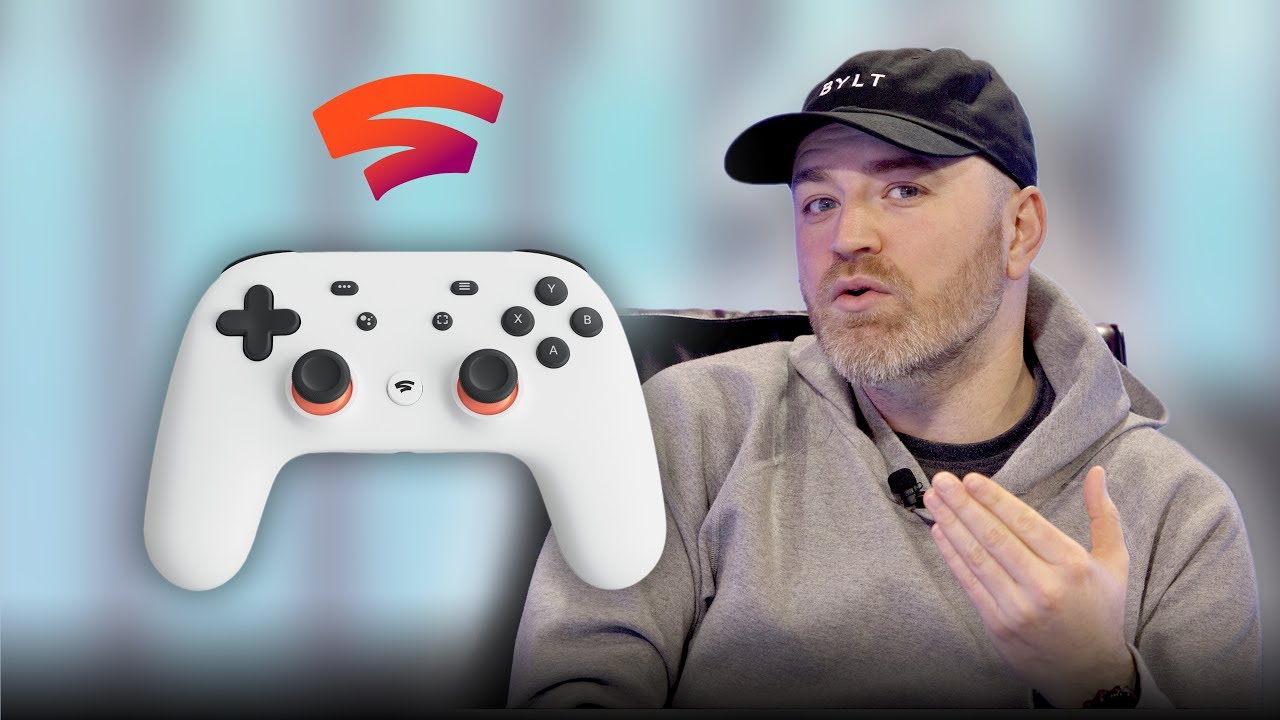
- The Stadia Controller connects over Wi-Fi directly to Google’s servers — bypassing the device entirely — to cut down on input latency, with a broader rollout planned for November 2019.
The Hardware-Free Pitch
What Google showed off at GDC wasn’t a console reveal in any traditional sense — it was closer to a data-center reveal. Stadia runs the game on Google’s servers and streams the video feed to whatever screen is in front of you, which means the usual friction of a new console generation — buying a $499 box, waiting for a restock, swapping discs — disappears. Hilsenteger’s breakdown treats this as the actual disruption: not better graphics, but zero hardware barrier to entry.
The numbers Google put on stage back that up on paper. A 10.7 teraflop custom AMD chipset dwarfs what’s sitting inside an Xbox One X or PS4 Pro, and because that horsepower lives in a server rack instead of a living room, Google can theoretically scale it up without ever asking the player to buy new hardware. That’s the sales pitch anyway — the AAA experience without the AAA price tag on a box.
Instant Access and the Controller
Stadia’s headline convenience feature is instant access: no installs, no patches, no thirty-minute wait after buying a new release. Google also leaned on its own ecosystem, pairing Stadia with YouTube through two features — “State Share,” which lets viewers jump straight into a specific moment of a game they’re watching, and “Crowd Play,” designed to let streamers pull viewers directly into their session.
The Stadia Controller is the one piece of physical hardware Google is still selling, and it’s built to skip the middleman. Instead of pairing with a phone or PC over Bluetooth, it connects over Wi-Fi straight to Google’s data centers, which is Google’s answer to the most obvious criticism of cloud gaming: lag. Whether that solves input latency for competitive, twitch-reflex titles is exactly the kind of question Hilsenteger raises without a definitive answer, because nobody outside Google had extensive hands-on time with it yet.
Stadia’s chipset is pitched at 10.7 teraflops — more raw power than an Xbox One X and a PS4 Pro combined.
Xbox Market Viability Remains Strong
The video’s title is a hook, but the actual analysis is more measured. Xbox has spent years building toward this exact moment with Xbox Game Pass and Project xCloud, its own streaming initiative, so Microsoft isn’t getting caught flat-footed by the idea of streaming — it’s already been selling a version of it. Xbox also still owns something Stadia doesn’t have on day one: a massive existing library, established multiplayer infrastructure, and a hardcore audience that has spent a decade building out controller preferences, friends lists, and achievement histories they’re not eager to abandon.
The bigger obstacles for Stadia aren’t creative, they’re infrastructural. Streaming 4K at 60fps eats bandwidth fast, and plenty of households are still working around data caps or spotty upload speeds that make buffering, not graphics fidelity, the real bottleneck. Hilsenteger frames this as the actual fight — not whether Google’s tech is impressive on a GDC stage, but whether the average household’s internet connection can deliver on it consistently enough to make hardcore players trust a server over a disc drive.
For anyone tracking how the console side of this standoff is shaping up separately, Xbox’s own showcase efforts are worth a look, including the Xbox & Bethesda Games Showcase full show and Microsoft’s next-gen messaging in The Truth About Xbox Series X.
Stadia doesn’t ship until November 2019, which leaves Google eight months to prove the teraflop numbers translate into something that actually plays well on a real household connection — and leaves Microsoft eight months to keep pointing at Game Pass as the reason nobody needs to bet everything on a service that doesn’t exist yet.




Xbox One In 2019! (Still Worth It?) (Review)
Cool Gaming Setup Tech Under $30
10 Video Games That Will Consume Your Life
RESIDENT EVIL 3 Remake Gameplay Demo Trailer (2020)
Sony Says PS5 Launch Lineup Will “Satisfy Fans” and Talks PlayStation 5 Price Point