

 InfoSearched
One Chinese developer built a shooter that looks like it came out of a AAA studio’s back lot — and he did it alone, in his spare time.
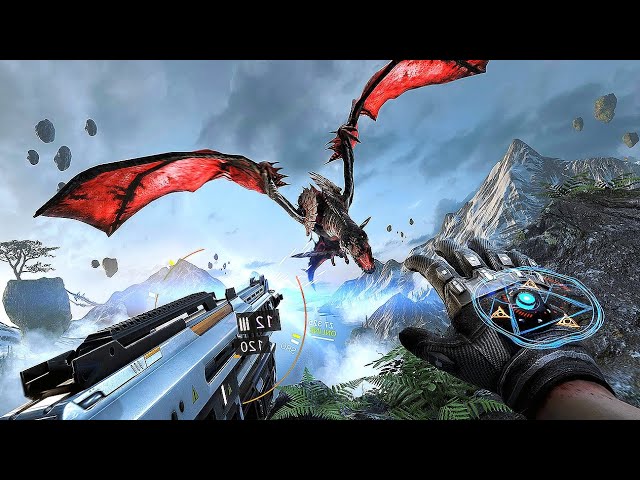
Bright Memory shouldn’t exist in the form it does. It’s a first-person shooter built by a single person, Zeng Xiancheng, working under the banner FYQD-Studio, blending gunplay, sword combos, and supernatural powers into something that looks and moves like it costs a hundred million dollars to make. It doesn’t. It cost one guy, Unreal Engine 4, and a lot of nights after work.
- Bright Memory launched into Steam Early Access in January 2019 and went viral for visuals and combat that punch well above what a solo project usually delivers.
- Zeng built the entire game — level design, combat systems, and Blueprint scripting — by himself using Unreal Engine 4, in his spare time.
- The strong reception led Epic Games to back the project through its Unreal Dev Grants, and Zeng has since announced a full reimagining, Bright Memory: Infinite, rather than simply finishing the original episodic format.
From Side Project to Viral Sensation
Bright Memory wasn’t pitched, funded, or greenlit by anyone. It was one developer’s personal experiment with Unreal Engine 4’s Blueprint system, built without a studio, a publisher, or a marketing budget behind it. When it hit Steam Early Access in January 2019, that backstory collided head-on with footage that looked like it belonged to a AAA shooter — fluid gunplay stitched into sword-slash combos and supernatural abilities, all running at a fidelity level people assumed required a team of dozens.
That contrast is exactly what made it spread. Clips of the combat — a rifle burst chained into a katana slash chained into a telekinetic shove — got passed around gaming circles specifically because viewers couldn’t square the production values with a one-man credits list. It’s the same kind of “wait, who made this?” reaction that’s turned other scrappy Unreal Engine passion projects, like the fan-built Unreal FPS reimagining of Super Mario Bros., into unlikely talking points.
The Backing From Epic Games
The commercial and critical reception was strong enough that Epic Games stepped in with support through its Unreal Dev Grants program, a fund the company uses to back independent projects built on its engine. For a solo developer with no studio infrastructure, that kind of backing isn’t just a check — it’s validation that the tech he was pulling off inside Blueprint scripting, without a dedicated engineering team, was legitimately competitive with what larger studios were shipping.
One person, working in his spare time with Unreal Engine 4, produced combat and lighting that looked like it came out of a full studio pipeline.
Zeng Scrapped Original Strategic Plan
Early in 2019, rather than simply grinding out the rest of the short proof-of-concept in episodic pieces, Zeng announced FYQD-Studio would reboot the entire project. The result is Bright Memory: Infinite — a significantly expanded, full-scale version of the game rather than a continuation of the original’s smaller scope. It’s a rare move: most solo developers with a viral hit try to ship the sequel fast. Zeng went the opposite direction, betting that the concept deserved a bigger canvas rather than a quick follow-up.
The showcase built around that expansion leans into advanced lighting, real-time ray tracing support, and the same hybrid gunplay-and-melee combat that made the original stand out — pushed further, with production values that put it in the same conversation as the kind of graphical benchmarks usually reserved for the best PC game graphics built to push hardware to its limit.
A Case Study in Solo Development
What makes Bright Memory worth revisiting isn’t just the visuals — it’s what it represents for what one developer can realistically pull off outside a studio system. Zeng didn’t have a publisher greenlighting milestones or a QA department; he had Unreal Engine 4’s tools and enough persistence to get combat feel, lighting, and level design to a place that reads as professional-grade. It sits in the same lane as other scrappy, against-the-odds solo builds that gaming audiences have rallied around, like the developer behind the multiplayer game everyone said couldn’t be built solo — proof that the barrier between “hobby project” and “shelf-ready release” keeps getting thinner.
Zeng’s next move is Bright Memory: Infinite itself — not a patch, not an episodic drop, but the full rebuild he chose over finishing what he’d already started. For a one-man studio, that’s the actual gamble worth watching: whether the expanded version can carry the same ray-traced, sword-and-gunplay identity that made the original a viral curiosity in the first place, at a scale big enough to hold up as a complete game rather than a proof of concept.








PC Gaming 750-800€ GTX 1660 – 8 GIOCHI PROVATI!
Most Ambitious Open World Co-op Zombie Survival Game?
New 3 WHEEL BIKE in GTA 5! (NEW DLC)
Top 15 NEW PS5 Games From Sony Event
ZERO to MILLIONS: The Ultimate Guide for NEW and BROKE Players of GTA Online