

 InfoSearched
Mark Cerny just told developers they can stop lying to players about loading screens.
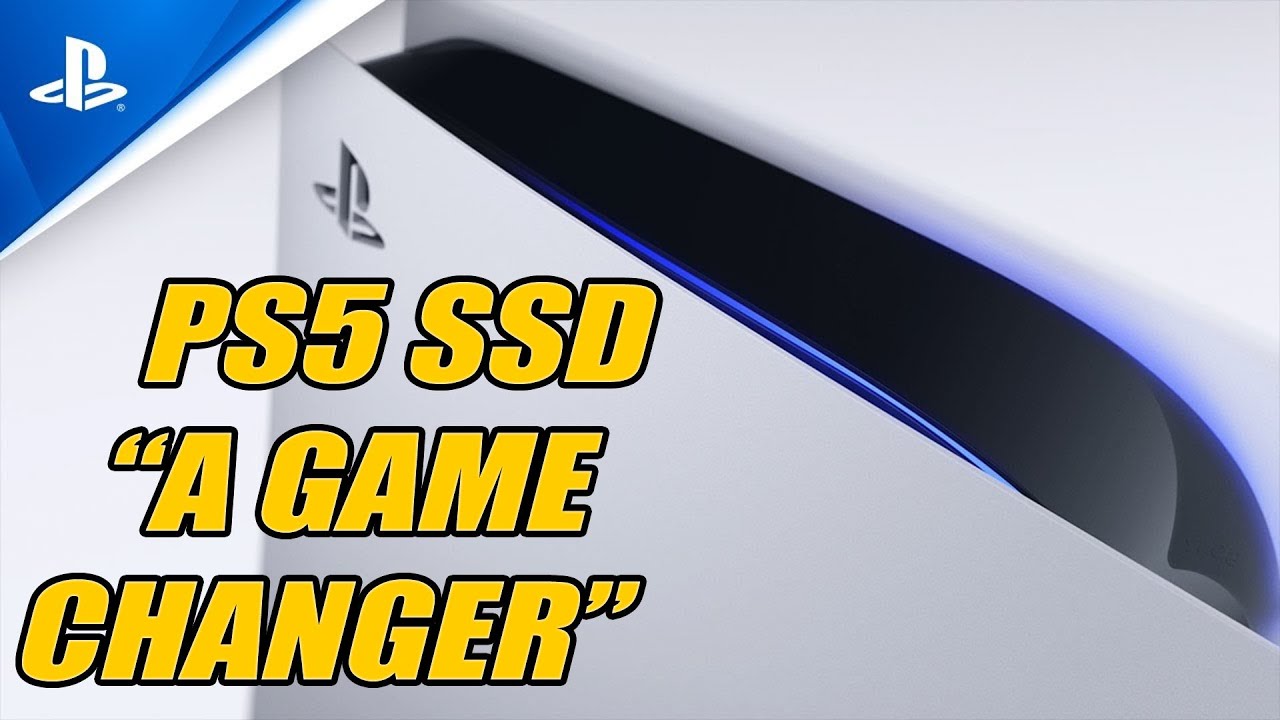
When Sony’s PS5 Lead System Architect took the stage for the March 2020 “Road to PS5” presentation, most of the attention went to headline numbers — teraflops, ray tracing, the shape of the console itself. But GamingBolt’s breakdown of the presentation zeroes in on something more consequential for actual game design: the custom SSD Cerny detailed isn’t just a faster hard drive, it’s a tool that lets designers throw out a decade of workarounds built to hide slow storage.
- The PS5’s custom PCIe 4.0 SSD hits 5.5 GB/s raw throughput uncompressed, up to 8–9 GB/s compressed — roughly 100 times the speed of the PS4’s mechanical hard drive, which averaged 20 seconds just to load 1 GB.
- Because the drive no longer needs to guard against slow seek times, the 16 GB of GDDR6 RAM only has to hold about one second of upcoming gameplay data instead of the roughly 30 seconds developers used to cache on PS4.
- Hard drives forced developers to duplicate common assets — mailboxes, lampposts, repeated textures — hundreds of times across disk sectors just to avoid seek delays; the SSD eliminates that duplication and shrinks install sizes as a result.
The Numbers Behind the Jump
The PS4’s mechanical drive wasn’t just slow in the way a slow phone is annoying — its seek latency actively shaped how PS4 games were built. Loading 1 GB took an average of 20 seconds because the read head had to physically travel across the disk to find fragmented data. The PS5’s SSD throws that limitation out: 5.5 GB/s uncompressed, scaling up to 8–9 GB/s compressed, which GamingBolt frames as close to a hundredfold leap over the outgoing hardware.
5.5 GB/s uncompressed, up to 9 GB/s compressed — roughly 100 times the throughput of the drive it’s replacing.
No More Artificial Speed Limits
GamingBolt’s first big point isn’t about graphics at all — it’s about pacing. On previous hardware, designers capped vehicle and character movement speed specifically so players couldn’t outrun the console’s ability to stream in new assets from the disc or hard drive. With the PS5’s SSD able to feed data fast enough to keep pace with fast traversal, that governor comes off. Open-world games no longer need to slow the player down just to protect the illusion.
Killing the Disguised Loading Screen
Anyone who’s ridden a slow elevator in a AAA game, or crawled through a suspiciously narrow cave passage, has been sitting through a loading screen dressed up as a set piece. GamingBolt calls this out directly: those winding corridors and drawn-out transitions exist to mask background asset streaming, not to serve the story. Because the PS5’s SSD removes the bottleneck those tricks were built around, developers lose the excuse to keep using them.
Smaller Installs and Smarter Memory
Two of GamingBolt’s points connect directly to how storage limitations used to bloat games. Hard drives required duplicating identical assets across disk sectors — the same lamppost or mailbox model copied hundreds of times — purely to reduce how far the read head had to travel. The SSD needs none of that redundancy, which should shrink install footprints considerably. It also changes how RAM gets used: instead of the 16 GB of GDDR6 holding roughly 30 seconds of anticipated gameplay data in reserve, it only needs to hold about one second’s worth, freeing up memory that can go toward pushing visual fidelity instead.
Patching Without the Rewrite
The last shift GamingBolt flags is one players will feel every time a game updates. Because the SSD eliminates the mechanical seek bottleneck that plagued hard drives, patches no longer require generating duplicate files or rewriting entire files just to slot a small fix into place. That should mean smaller, faster updates hitting PS5 consoles compared to the download-and-wait routine PS4 owners are used to — one more place where the SSD’s real value shows up long after a game has already shipped.








Xbox Game Pass Update | 8 NEW TITLES Added | May & June 2019
First Time Playing Death Stranding
A gaming pre-built that doesn’t suck (RARE!)
Xbox One in 2019 – worth buying? (Review)
CAN YOU BUILD A MAC GAMING RIG???