

 InfoSearched
Before there was an EVO bracket or a “FGC,” there was one teenager in Southern California nobody could beat.
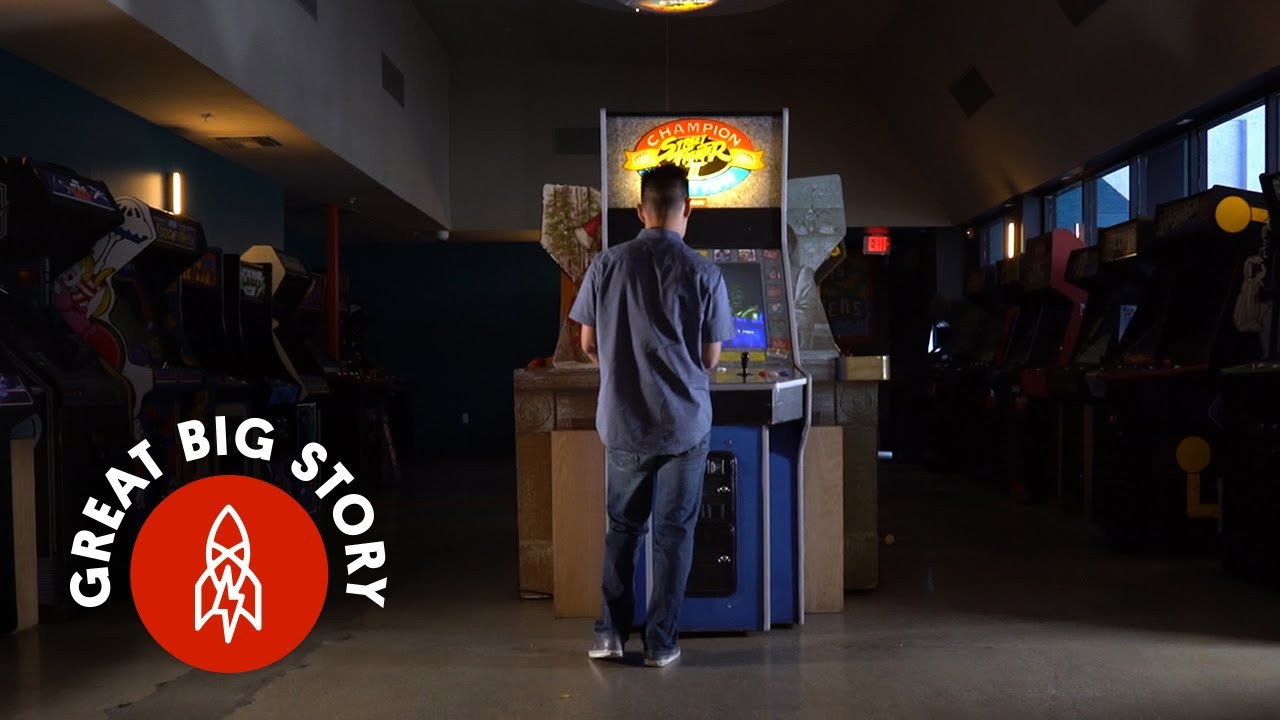
Great Big Story’s mini-documentary “We Found the Champion of Street Fighter II” goes looking for Tomo Ohira, the arcade prodigy whose name became shorthand for untouchable Street Fighter II play in the early 1990s. The piece tracks him down decades after he simply stopped showing up, and asks him to explain why he walked away from a game he’d already mastered.
- Ohira built his reputation in the early ’90s at Southern Hills Golfland in Stanton and the Yellow Brick Road arcade in San Diego, running through challengers with Ryu and Ken.
- Capcom put him in an official VHS strategy tape teaching combo execution — a rare honor for an unsponsored arcade player in that era.
- At the height of his fame in the mid-1990s, Ohira abandoned competitive play entirely, vanishing from the scene and turning into an urban legend among the players who came after him.
The Arcade Circuit That Made Him
Street Fighter II: The World Warrior hit arcades in 1991 and rewired how people played fighting games almost overnight. Quarter lines formed around cabinets, and in Southern California, one name kept coming up whenever players wanted to know who couldn’t be beaten. Ohira built his game on spacing and zoning — reading distance, controlling the screen, forcing opponents into mistakes — years before anyone had a name for those concepts or a stage to showcase them on.
Southern Hills Golfland and the Yellow Brick Road arcade weren’t just where Ohira played; they were where his legend got built round by round, in front of the same regulars who kept feeding the machine hoping this time would be different. It rarely was.
Capcom Notices Its Own Champion
Ohira’s dominance didn’t stay local for long. Capcom tapped him to appear in an official VHS strategy tape demonstrating gameplay mechanics and combo execution — a level of recognition that put him in rare company for a player whose entire résumé was built on arcade cabinets, not sanctioned tournaments. In an era with no livestreams, no sponsorships, and no prize pools to speak of, getting picked by the publisher itself was as close to going pro as the scene allowed.
He was the “original Street Fighter master” — and then, at the peak of it, he just wasn’t there anymore.
Walking Away at the Peak
That’s the part of the story that turned Ohira into folklore. Sometime in the mid-1990s, right as arcade culture was cresting, he stepped away from competitive play to focus on school, career, and the rest of his life outside the cabinet. No farewell run, no final tournament — he was just gone, and the players who’d grown up losing to him were left to wonder what happened to the guy nobody could touch. For a scene that didn’t yet have the internet infrastructure to track its own history, that kind of disappearance was enough to build a legend around.
It’s the same instinct that runs through stories of players who poured years into a single game — except Ohira’s story runs the other direction, a player who reached the top and simply chose to stop.
Finding Him Decades Later
Great Big Story’s crew eventually located Ohira and got him talking on camera about the earliest days of competitive fighting games, what the arcade grind actually felt like night after night, and why he chose to walk away when he did. It’s the kind of retrospective that fits alongside broader looks at how competitive gaming has evolved since those pre-internet arcade days into something with actual infrastructure behind it.
Ohira never got an EVO run, never had a Twitch following, and never got to defend his reputation against the generation of Ryu and Ken players who came after him. He just left the cabinet at Southern Hills Golfland behind and let the legend do the rest.




10 Best FREE iOS & Android Games of June 2019
Ubisoft Reveals New Game Titles at E3 2019 | NowThis
Phil Spencer On Working With Sony And Competing With Google Stadia
Gaming Masterpieces
Fan Reimagines Super Mario Bros. as an Unreal FPS – Gameplay