

 InfoSearched
Death is the easy ending — Kaza’s new essay argues horror games save their real cruelty for the survivors.
YouTuber Kaza, a creator built a following on long-form retrospectives that pick apart horror storytelling rather than just rank scares, turns his attention in “The Most Terrifying Fate In a Horror Game” to the moments where dying would actually be a relief. The video steps away from jump scares and monster encounters entirely, focusing instead on the philosophical idea of a fate worse than death — scenarios where a character’s mind, body, or free will gets stripped away with no exit written into the story.
- Kaza is known specifically for analytical video essays on horror gaming narratives rather than reaction content or straightforward reviews.
- The video reframes horror around the concept of a “fate worse than death,” arguing that permanent, conscious suffering hits harder than any kill scene.
- Kaza groups the trope into recurring scenario types: irreversible psychological entrapment, forced eternal consciousness, cyclical purgatorial punishment, and severe body horror where survival only prolongs the agony.
Redefining Horror Beyond the Jump Scare
Most horror-game breakdowns default to the same currency: how loud the scare is, how well the monster is animated, how many times a player jumps out of their seat. Kaza’s essay explicitly rejects that framing. The through-line of the video is that termination — a character simply dying — is a mercy compared to what certain narratives actually inflict, and that the genre’s most unsettling writing shows up when death stops being an option at all.
That distinction matters because it changes what “scary” even means inside the analysis. Instead of measuring tension by threat of death, Kaza measures it by loss of control — whether a character can still act, still resist, still hope for release. When none of that remains, the horror becomes existential rather than physical.
Four Ways Horror Games Trap You Forever
Kaza breaks the trope into distinct mechanical categories rather than treating “fate worse than death” as one vague vibe. Irreversible psychological entrapment covers characters left fully conscious while their own body gets overtaken by something else — awareness with zero agency. Forced eternal consciousness strips away the possibility of rest entirely, denying a character even the escape of unconsciousness or death.
The other two categories lean more structural. Cyclical purgatorial punishment traps a character in a surreal loop that resets before any real progress or escape can happen, while severe body horror scenarios treat survival itself as the punishment — staying alive just means enduring more damage, not getting closer to safety.
A fate worse than death doesn’t end the story — it just keeps you conscious inside it.
The Design Logic Behind Helpless Suffering
What ties all four categories together, in Kaza’s framing, is player vulnerability paired with hopeless lore — the sense that no amount of skill or preparation changes the outcome. Standard horror-game tension usually offers some form of counterplay: run, hide, fight, solve the puzzle. The scenarios Kaza highlights remove that lever entirely, which is exactly what makes them land as existential dread rather than momentary fear.
That’s a different toolkit than the one used in most horror-adjacent releases discussed elsewhere in gaming coverage, from co-op survival shooters to open-world action titles built around games that punish players for stepping away. Kaza’s essay isn’t cataloguing difficulty or grind — it’s cataloguing narrative dead ends where the writing itself refuses to offer an out.
Kaza’s Place in the Horror Essay Space
The video sits comfortably alongside the broader wave of long-form YouTube essayists who treat game narratives with the same scrutiny film critics apply to screenplays — picking apart lore, motive, and structure rather than just showing gameplay footage. That approach has turned channels like Kaza’s into a go-to resource for viewers who want the “why” behind a game’s scariest moments, not just the “what.”
It’s the same instinct that drives deep dives into a single game’s mythology, the kind of breakdown you’d get from a piece explaining BioShock’s story and characters beat by beat rather than just recommending the game. Kaza applies that same lens across multiple titles at once, using the “fate worse than death” idea as the connective thread.
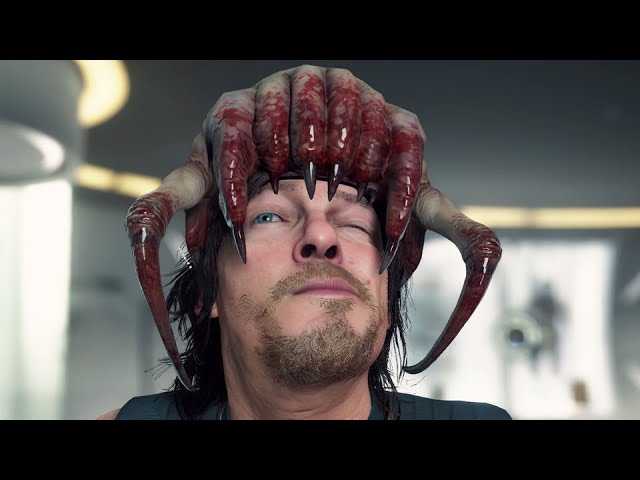
The original hook for this piece — get eaten by a headcrab or die — isn’t a throwaway joke. It’s a textbook example of exactly what Kaza’s essay is built around: a body-horror fate where survival means losing everything that made you a person, the same dread that made Half-Life: Alyx land so hard when it dropped players back into that universe. Death, by comparison, is the merciful ending.




Top 25 Best PS4 Games of All Time [2019 update] | whatoplay
New 3 WHEEL BIKE in GTA 5! (NEW DLC)
Playing CREEPY APP GAMES
Evil Dead: The Game – Gameplay Overview Trailer | PS5, PS4
The First of Its Kind GAMING MONITOR! – Samsung G7 Odyssey