

 InfoSearched
Every online match throws a script out the window the moment a real person joins the lobby.
Razbuten’s latest video essay picks up a question his channel has been chasing since his first viral upload: what actually happens when someone with zero gaming background gets dropped into a system built entirely on unspoken rules? This time, the subject is online multiplayer, and the guinea pig is once again his wife, a woman who has never leveled up a character, called a rotation, or muted a stranger mid-match.
- The video, titled “What Online Multiplayer Is Like For Someone Who Doesn’t Play Games,” runs 17 minutes and 9 seconds and was released in March 2020.
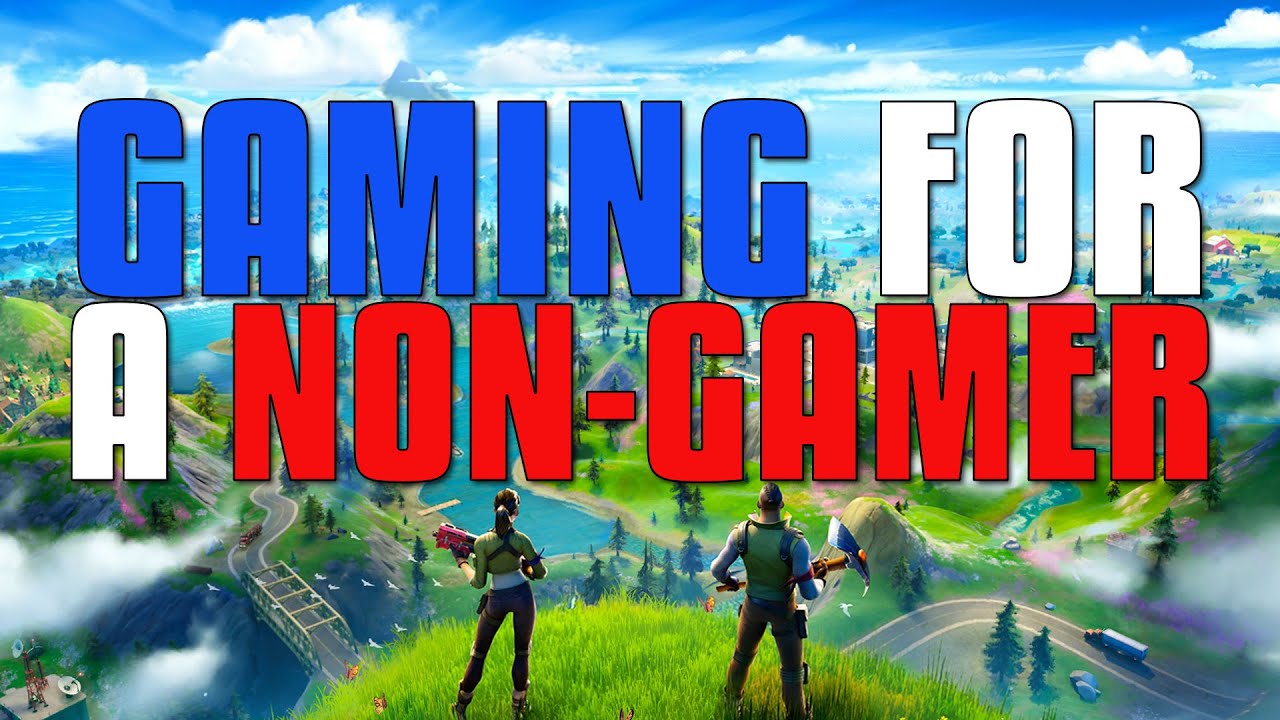
- It’s an installment in Razbuten’s “Gaming For A Non-Gamer” series, which began as an informal experiment documenting how his wife — a lifelong non-gamer — interprets basic game design.
- Unlike the first entry, which focused on camera controls and visual literacy in single-player games, this one tracks her live inside actual multiplayer lobbies with real opponents and teammates.
The Series Behind the Experiment
Razbuten’s channel built its reputation on a simple, almost documentary premise: hand a controller to someone with no gaming history and watch what a lifetime of gamer assumptions look like from the outside. His first “Gaming For A Non-Gamer” video exposed how much unspoken language is baked into game design — reading a minimap, recognizing a glowing object as interactive, understanding that a red outline means “enemy.” That video traveled well beyond the usual gaming audience specifically because it wasn’t mocking anyone; it was translating.
This follow-up keeps that same observational tone but changes the terrain entirely. Single-player games, for all their complexity, are still authored systems — a designer decided what the enemy does, when, and why. Online multiplayer strips that scaffolding away and replaces it with strangers who have no obligation to behave predictably, which is exactly the gap Razbuten wanted his wife to walk into on camera.
Single Player Mechanics Fail Online
The video’s throughline is a contrast: static design versus live human behavior. In a single-player campaign, an enemy’s attack pattern is fixed, a puzzle has one intended solution, and the pacing bends around the player. None of that holds once a real opponent — or a real teammate — is added to the equation. Razbuten uses his wife’s reactions to show how disorienting it is to face decisions that aren’t scripted by anyone, where a teammate might rush in recklessly or an opponent might do something no tutorial ever explained.
That unpredictability is the entire subject of the piece. It’s not about whether a game’s netcode is smooth or its matchmaking is balanced — it’s about what happens to someone’s confidence when the “opponent” stops being a predictable AI and becomes a person making their own choices in real time, often faster than a newcomer can process.
Single-player games have rules; multiplayer games have people, and people don’t follow a design document.
The Human Variable
What separates this entry from the barrier-to-entry issues Razbuten catalogued in his original video — reading interfaces, understanding camera conventions — is that those problems are fixable with time and repetition. A confused player can pause, reread a prompt, retry a level. Online multiplayer doesn’t pause. Teammates expect a certain baseline of competence immediately, voice chat moves at conversational speed, and mistakes get punished in real time by people who have no idea they’re playing with someone experiencing all of it for the first time.
Razbuten frames this as a steeper, more socially loaded version of the same problem his channel has always tracked. It’s one thing to feel lost in a game’s menus alone in your living room. It’s another to feel lost while three strangers on a headset are reacting to your every move, which is the exact discomfort the video sits inside of for most of its runtime.
The theme lines up with a broader trend other creators have leaned into — turning the chaos of live online lobbies into content in its own right, whether that’s spectating oblivious players in a battle royale or breaking down what it takes to actually build an online multiplayer game from scratch. Razbuten’s angle is narrower and more personal, but it taps the same fascination: multiplayer is unscripted theater, and everyone reacts to it differently.
By the end of the 17-minute runtime, the video doesn’t resolve into a tidy verdict on whether online multiplayer is “good” or “bad” for newcomers — it just leaves his wife, and the audience, sitting with how much harder the unpredictability of real people makes something that already felt unfamiliar. That’s the note the entry closes on, and it’s the same honest, unresolved territory the rest of the “Gaming For A Non-Gamer” series has built its following on.



5 ULTIMATE Ways To Improve Your GAMING SETUP 2019! ???? | BEST Gaming SETUP HACKS 2019 (Simple Guide)
SOLO STEALTH SNIPER! – Sniper Ghost Warrior Contracts 2 Gameplay
A Portable Arcade For The Super Wealthy
NEW MARVEL’S AVENGERS GAMEPLAY..
What happened To The Stadia?